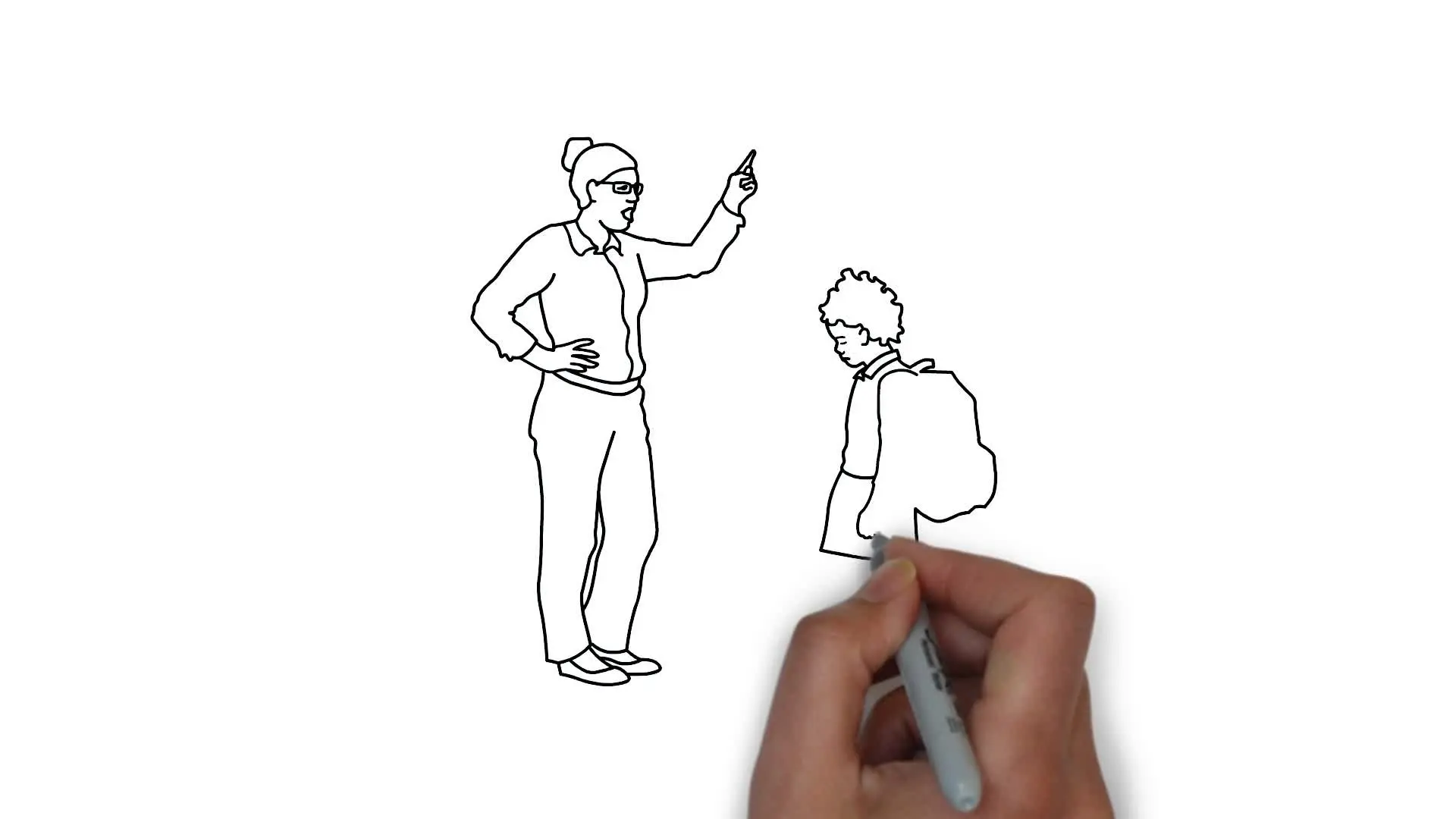
Do you remember the teacher that told you that you were capable of amazing things? The one that painted a picture of a capable, talented, inspiring individual. Or are your memories of a teacher that slammed your art project, knocked your writing piece or shattered your dreams of becoming a dolphin trainer?
It turns out that the impact that others have on our self image is far different for adolescents than it is for adults.
The mentalizing system in our brains is the system that’s used to think about what others are thinking. When you see a distracted, unfocussed student and wonder whether they’re hungry rather than being disruptive, you’re using your mentalizing system. Tests have shown that children generally develop a mentalizing system by the the time they are five years old.
Work by neuroscientists Jennifer Pfeifer and Professor Matthew Lieberman of the Social Cognitive Neuroscience Laboratory at UCLA showed that young people (13 year olds in this case) assess themselves differently than adults do. When asked to assess what other people think of them (eg. my friends think I’m very friendly), both adolescents and adults used their mentalizing systems.
When asked to think of what they thought of themselves (eg. I think I’m very friendly) adults showed no activity in their mentalizing system while the young people produced strong activity in the mentalizing regions of the brain.
When adolescents were asked what they thought of themselves, they immediately thought about what others thought of them. As we’re developing our sense of self, what our parents think of us, what our friends think of us, what our teachers think of us has a huge impact.
When you think of a high school setting this makes a lot of sense. Teenagers can be acutely self-conscious, aware of what they look and sound like and super sensitive about what others think. Of course they are, thats how they develop and grow their sense of self. We did exactly the same thing when we were their age.
We develop a sense of what others think of us through what they say and how they act. A teacher may not say anything negative about our dream of dolphin training, but sighing and rolling their eyes is as an equally strong message that it’s not something they believe in. And when they don’t believe in us, it makes it far more difficult for us to believe in ourselves.
I remember participating in an activity in my 7th form boarding group, where we passed a sheet of paper around and we each added a positive comment about each of our classmates. I was surprised to see how laid back and easy going others thought that I was. Because our personal attributes weren’t something we ever talked about it came as a real surprise and something I was pleased to add to my own image of myself.
In a classroom, if teachers are able to express positive messages about their students and they can encourage positive messages from other students, they can go a long way to building a positive image of self in their pupils.
What are you saying to develop positive self-image in your students? How can you and your team foster classmates to give positive feedback, to support and uplift your students?
Comments from you and from others really do connect with your students.
If you’d like to book a Connection Keynote for your kahui ako or principals association please get in touch.